
When Not to Use AI Agents is an important architectural decision for modern software engineers. AI agents are powerful, but they are not the right solution for every software problem. When a task has predictable inputs, well-defined rules, and a deterministic execution path, a traditional workflow or backend architecture can often deliver better reliability, lower latency, and lower cost. AI agents are powerful, but they are not the right architecture for every software problem. If a task has predictable inputs, well-defined rules, and a deterministic execution path, introducing an autonomous AI agent can add unnecessary complexity, latency, cost, and operational risk. In many production systems, a conventional workflow, RAG pipeline, function call, or standard backend logic can solve the same problem more reliably. So, when should you not use AI agents? The answer is simple: avoid agentic architectures when the problem can be solved reliably with simpler, more predictable software. This guide explains when AI agents are unnecessary, the hidden engineering costs of agentic systems, when traditional workflows are a better choice, and the situations where autonomous AI agents genuinely provide an advantage. What Is an AI Agent? An AI agent is a software system that can interpret a goal, decide what actions to take, interact with tools or external systems, evaluate intermediate results, and continue executing until it reaches an outcome. Unlike a conventional application that follows a predefined execution path, an agent can dynamically determine its next step based on the current context. This flexibility is extremely useful for certain classes of problems. However, flexibility also introduces additional architectural complexity. The important engineering question is therefore not: “Can an AI agent solve this problem?” In many cases, the answer will be yes. The better question is: “Does this problem actually require autonomous decision-making?” AI Agents vs. Deterministic Workflows One of the most common architectural mistakes is treating every LLM-powered workflow as an AI agent. They are not the same. A deterministic workflow follows a predefined execution path. The developer decides which operation happens first, what happens next, and how the system responds to failure. An AI agent, by contrast, can determine its next action dynamically based on the current context, available tools, and intermediate results. For example: Deterministic Workflow User Request → Retrieve Data → Generate Response → Return Result Agentic Workflow User Goal → Reason → Select Tool → Execute → Evaluate Result → Select Next Action → Repeat The second architecture provides more flexibility, but that flexibility comes with additional complexity. If the execution path is already known, a deterministic workflow is often the better engineering choice. Use an AI agent when the system genuinely needs to decide what to do next rather than simply execute what you have already defined The Hype vs. Reality: Are AI Agents Overused? or Why AI Agents Are Overused in Production? AI agents and agentic AI architectures have received enormous attention because they can perform increasingly complex tasks with limited human intervention. However, the availability of a powerful technology does not automatically make it the right architectural choice. Modern software engineering has seen similar cycles before. New architectural patterns often become popular and are sometimes applied far beyond the problems they were designed to solve. The same risk exists with AI agents. Engineers can easily introduce autonomous reasoning layers into applications where a simple API, database query, function call, or deterministic workflow would be sufficient. Complex systems are inherently harder to control, debug, and maintain. Adding autonomous loops to deterministic problems doesn’t make your product smarter—it can make it more fragile. Most everyday software capabilities do not require: The goal should not be to eliminate AI agents. The goal should be to use them only where their additional capabilities justify their additional engineering cost. When NOT to Use AI Agents There are several situations where introducing an AI agent can create more problems than it solves. 1. When the Workflow Is Predictable If the application already knows what steps need to happen, there is little reason to ask an autonomous system to decide those steps at runtime. For example, consider a backend service that needs to: An AI agent adds little value here. Standard backend code, database queries, and business logic can perform the operation faster and more predictably. Rule of thumb: If you can define the workflow clearly before runtime, start with a deterministic workflow. 2. When Traditional Backend Logic Is Enough Many software problems are fundamentally deterministic. CRUD operations, authentication, authorization, payment calculations, database transactions, validation rules, scheduled jobs, and API integrations generally do not require autonomous reasoning. For example, asking an AI agent to decide how to retrieve a customer’s order history from PostgreSQL may introduce unnecessary model calls, tool selection, latency, and failure points. A conventional API endpoint with optimized SQL can perform the same task with significantly less overhead. If the business rule can be expressed reliably as code, write the rule as code. 3. When a RAG Pipeline Is Enough Not every AI application that uses retrieval needs an agent. If the workflow is always: Retrieve relevant documents → Construct context → Generate response then a conventional Retrieval-Augmented Generation (RAG) pipeline may be the more appropriate architecture. For example, an internal knowledge assistant may simply retrieve relevant company documentation from a vector database and provide that context to an LLM. If there is no requirement for the system to dynamically decide which tools to use, which sources to investigate next, or how to change its execution strategy, an autonomous agent may be unnecessary. 4. When Low Latency Is Critical Production applications often have strict response-time requirements. An agent may need to perform multiple model calls, tool calls, retrieval operations, validation steps, or reasoning iterations before producing the final response. Each additional step can increase total execution time. If an application needs a predictable low-latency response, a simpler architecture may be a better engineering choice. 5. When Cost Predictability Matters Agentic systems can create variable execution costs. A simple user request might trigger several
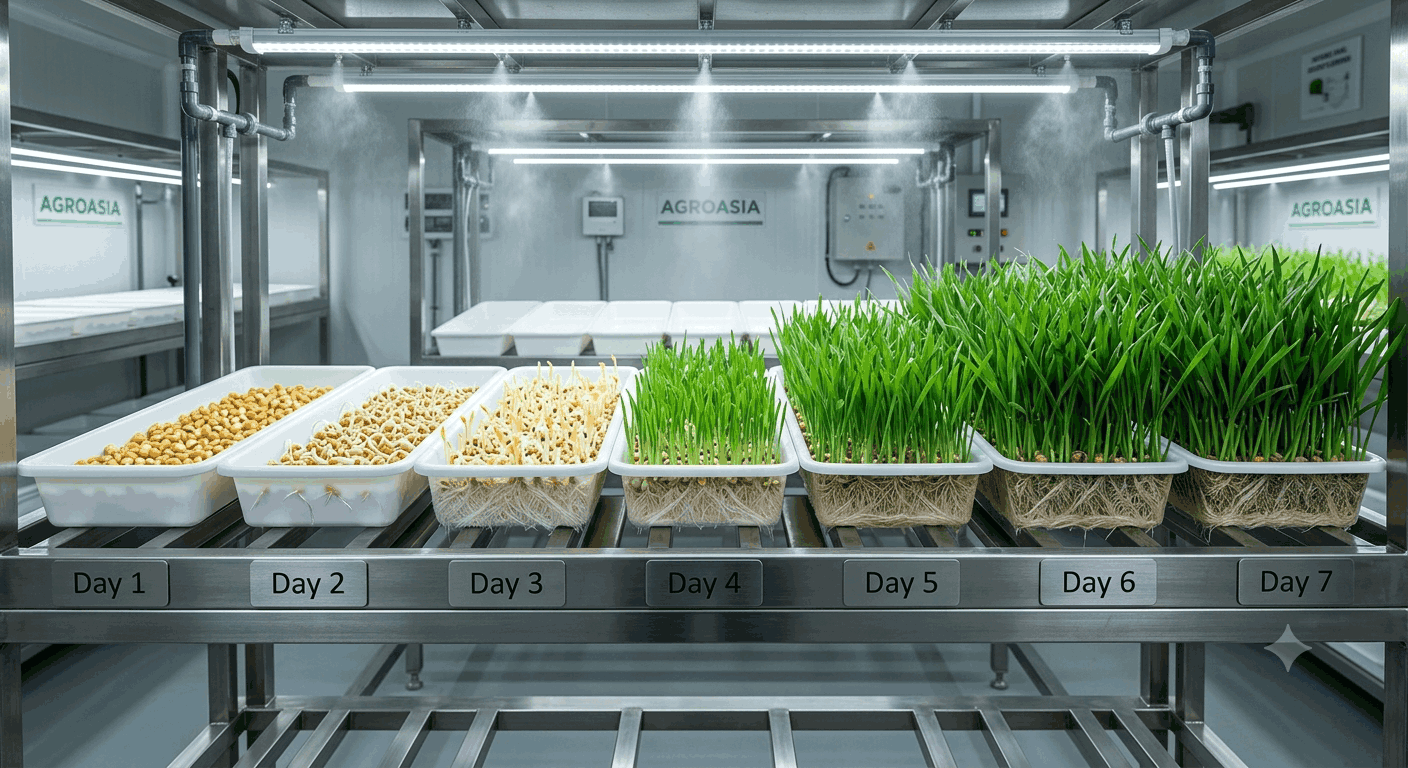
हाइड्रोपोनिक फॉडर मशीन क्या है? 7 दिन में हरा चारा उत्पादन की आधुनिक तकनीक
**Excerpt (WordPress Excerpt)**
Hydroponic Fodder Machine एक आधुनिक कृषि तकनीक है जो बिना मिट्टी के केवल 7 दिनों में पौष्टिक हरा चारा तैयार करती है। जानिए यह तकनीक कैसे काम करती है, इसके फायदे क्या हैं, और कैसे यह डेयरी फार्म, बकरी पालन एवं पशुपालन व्यवसाय में पानी, भूमि और चारा लागत को कम करने में मदद कर सकती है।

Android vs iOS Development: Which Platform Should Startups Choose?
Mobile App Development, AI & Technology, Algo Trading, Android Development, App Monetization, Automation, Business Growth, CRM & ERP Apps, Digital Transformation, Enterprise Mobility, FinTech & Trading, FinTech Apps, Flutter Development, Healthcare Apps, iOS Development, React Native, Smart Automation, Startup & Innovation, UI/UX Design
Apne startup ke liye naya app bana rahe hain par samajh nahi aa raha ki Android se shuru karein ya iOS se? Is article me janiye dono platforms ke hidden costs, target audience aur monetization strategies, taaki aap apna keemti paisa aur samay dono bacha sakein!
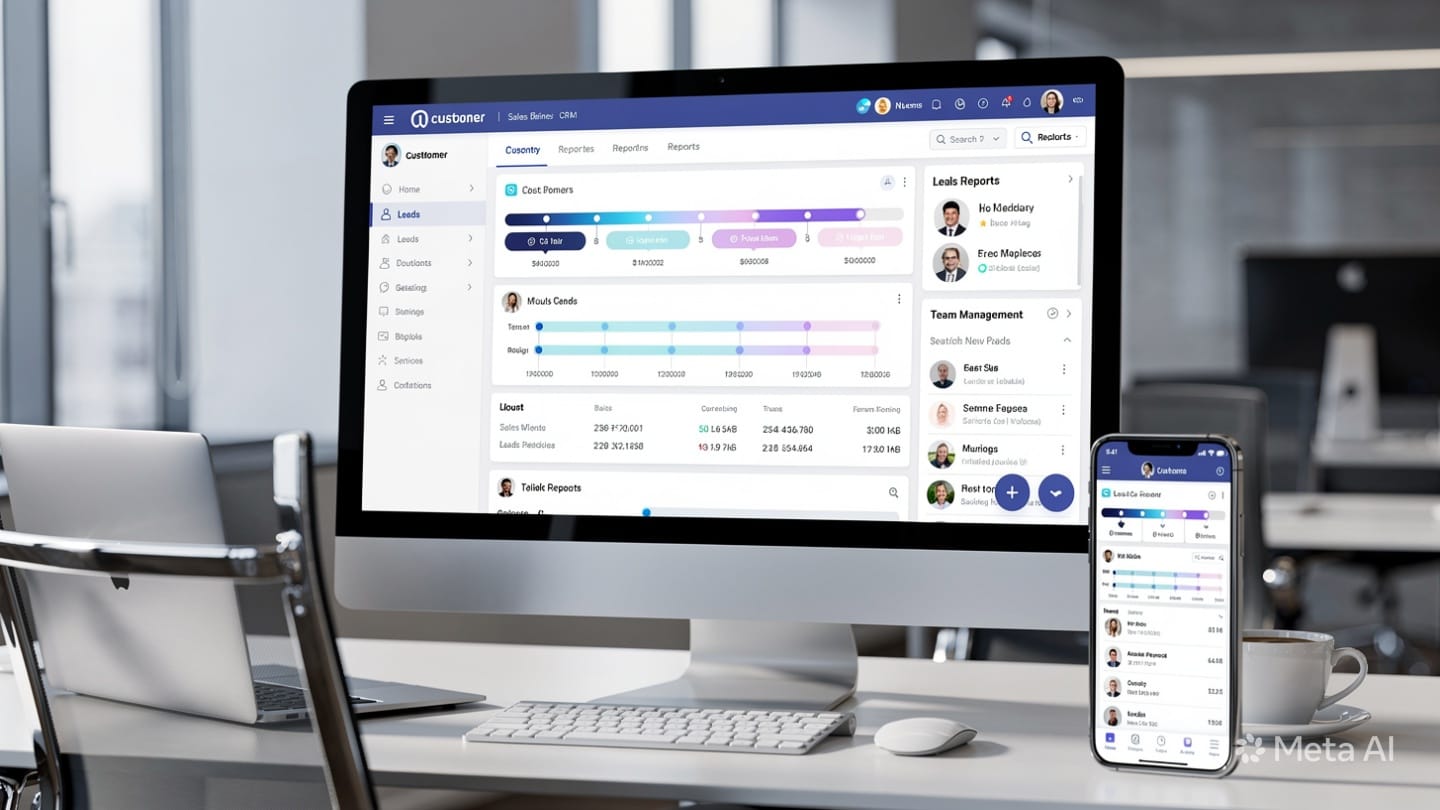
Why Flutter Is Dominating Cross-Platform App Development in 2026
Startup founders ke liye sabse bada sawal: Android app banayein ya iOS? Janiye dono platforms ke advantages, costs aur 2026 me startups ke liye sabse best cross-platform solution.

Digital Business Growth in India का नया दौर: AI, FinTech और Smart Automation से बदलता व्यापार
Bharat me Digital Business Growth ka naya daur shuru ho chuka hai. Janiye kaise AI, FinTech Solutions, aur Smart Automation ke sahare modern startups aur enterprises apne business ko scalable aur future-ready bana rahe hain.